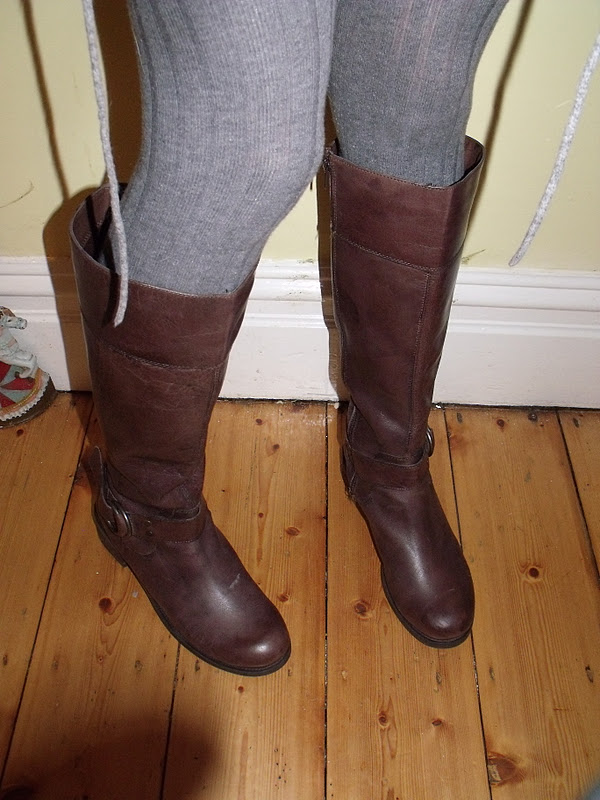
I wear fur, I always have and over the years I've been told I'm 'cruel', 'disgusting', 'evil' and a numerous other things. I as a meat eater I always believed that wearing fur was just another part of that, being a by product of the food industry after all. Real fur is considered unpleasant by many people whom wear leather shoes and eat meat themselves. To write this blog I wanted to find out all I could about Real Fur and Faux Fur, to really get an understand about it in an unbiased way. My views are changeable, I try and live as ethical a life as I humanly can. I eat meat, I wear fur but I have a code of ethics. I have always believed in balance, I'm an Apex predator so its my duty to eat meat to fulfil my role in the food chain, don't eat something you aren't willing to kill personally, that sort of thing. In the Europe we produce roughly 85% of the worlds fur production so my aim of this blog was to expand my knowledge on the subject and see if my fur habits change.
The first major road block I came up against when researching this entry was the fact so much of this debate is opinion, even BBC which is supposed to unbiased in an
article about the fur industry describes fur wearing as vanity though this article is comparatively very balanced. This over bearing opinion without factual evidence and statistics was reflected time and time again. The websites that pop up on Google are PETA and anti cruelty websites. I want a rounded view, and I struggled to find it.
FurCruelty.com for
instance
on
their
Fact
page
states
that
"Every aspect of an animals life on a fur farm is living hell. Animals are confined to small and restrictive cages for their entire lives. From birth, animals are torn away from their mothers and forced to live either a life of isolation or a claustrophobic life in a small cage cramped full of other animals. Due to the severe lack of space, animals become extremely psychologically and physically ill, often resulting in premature death. Animals may resort to cannibalism and chewing off their own limbs, a direct result of their desperate situation. The constrictive and squalid cages become filled with excretion and are rarely cleaned or maintained. This lack of cleanliness causes many animals to contract illness and disease, causing the animals immense pain. Because there are no regulations on most fur farms, animals do not receive veterinary care so they are forced to endure continuous suffering. " Now my first pondering on this so called fact is that surely fur from an animal in the above conditions wouldn't be of a quality that could be used. When your pet gets sick their coat dulls, if its not clean it mats together... So how could it be profitable to keep animals in conditions where they damaged their furs with excrement? Fur farming in Europe is not the same as that of asia, fur from asia is cruel, I am not debating that but so little percentage fur comes from asia and the majority of anti-fur propaganda uses evidence from asia... European regulations on fur are incredibly tight, mink for instance are kept in cages that have nest boxes and allow the animals to stand on their hind legs. This is a greater level of care than intensively farmed chickens so although it can't be a defence of the industry that it is not as bad as others, its a valid point. The second major point I had with that article was the emotive language used, I felt it particularly manipulative and lacking in fact. Faux fur has the benefit that it doesn't kill animals in the making of it, unless its actually real fur labelled as faux fur which does happen under trade laws. Faux fur also doesn't get moth eaten and damaged in the warmer months. The energy that goes into producing a faux fur garment is also not as high as the energy required by a real fur garment, so the carbon foot print of real fur isn't as green as faux. Though real fur is biodegradable, faux fur is not indeed it can take anywhere from five hundred to one thousand years to break down. Faux fur isn't as good for the skin either as it does not allow it to breath properly.

Real fur insulates incredibly well against the cold, a property that faux fur has yet to master. It is a natural resource from a pest animal, that is used in the food chain. So if more people ate rabbit fur would be a cheaper commodity as it would be considered waste. Unfortunately the preserving process of making a real fur garment is incredibly polluting, the fur is sprayed with formaldehyde to preserve it but then again so are human bodies before they are put in the ground.
From my research into this controversial industry I have learnt a lot. I have also decided that I am not going to stop wearing fur. The fur industry is not perfect, for this reason I only buy vintage furs that way I can avoid promoting an industry that is flawed. There is no way currently to tell which furs are wild caught and which are farmed. This is a mistake on behalf of the industry, I believe as people would choose to pay more for ethically sourced fur and it would be good advertising for the industry. You have to remember that culling animals is required, particularly in the UK where the majority of the natural predators have been killed off and to sustain a healthy ecosystem animals need to be managed or they over populate. If the population numbers are controlled by predators, then over populated animals destroy habitats, slowly starve to death and face increased chances of disease. We need to provide the role of predator, or we are being unethical, we are not providing our role in the food chain. This is most relevant with invasive species, mink in the UK are not a native species, they have no natural predators and damaging our song bird, rodent and aquatic populations. Unlike most people believe the main cause for them is not releases made in the 1970's by activist, though this exasperated the problem populations where already established from unregulated fur production from as early as the 1940's. Mink control is necessary in the UK. The only way this is possible is culling. Now if you take this role of thought, you have to use the fur anything else is disrespectful to the creature. Wild fur is absolutely the way to go, though until the industry stops classing fur by grade and not source new fur is not as ethical as you don't know its provenience.

The most notable thing I learnt from looking into this is that I don't trust, support or believe Peta are anyway a just organisation. They are simply scamming idealistic fools for money thinking they are making a difference to animals suffering when in fact they are funding arsonists. The Peta animal shelters have a shockingly high kill rate figure and that leads me to believe that they are not an animal rights movement. Any true animal rights movement would not destroy a healthy animal, there is even rather strong rumours that they staged many of the propaganda photographs used in their advertising, which would frankly be sickening. So for that reason I urge you to research your beliefs, you might find out they aren't as trust worthy as their advertising makes them.
Yours
Belinda Stepford
xxx